

Adaptogens and Colostrum
Say what?

Before moving on from the subject of supplements, let’s do a deeper dive into the topics of adaptogens and colostrum. These terms have been popping up everywhere in the wellness world. Who hasn’t seen an ad for ARMRA colostrum or Kate Hudson’s adaptogenic INBLOOM supplements?? Even my corner coffee shop is advertising a “Chagaccino”.
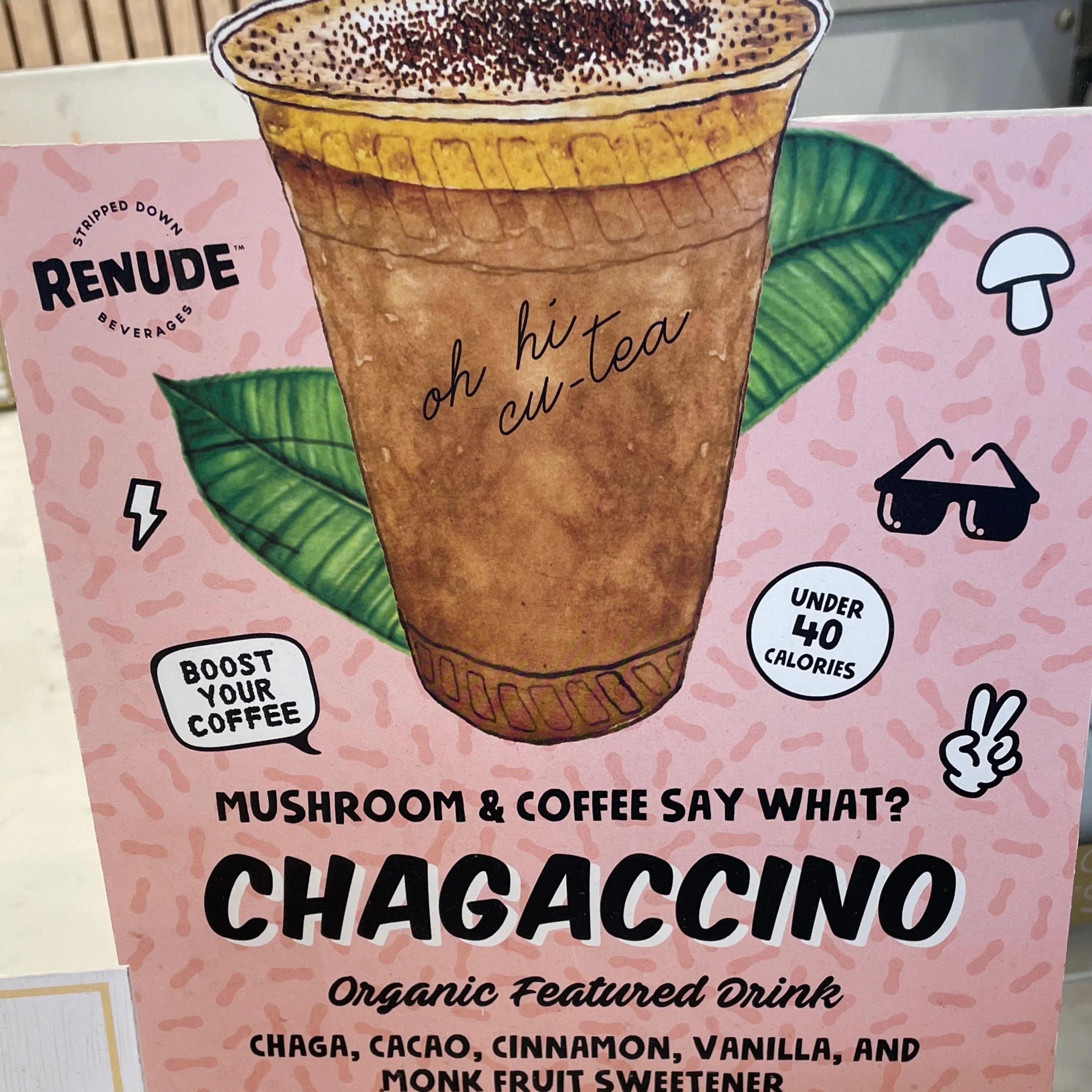
What are these things and should we be taking them???
To answer these questions, this post will explore:
1) What are adaptogens and colostrum?
2) What are their purported effects?
3) The clinical evidence (if any) for their use.
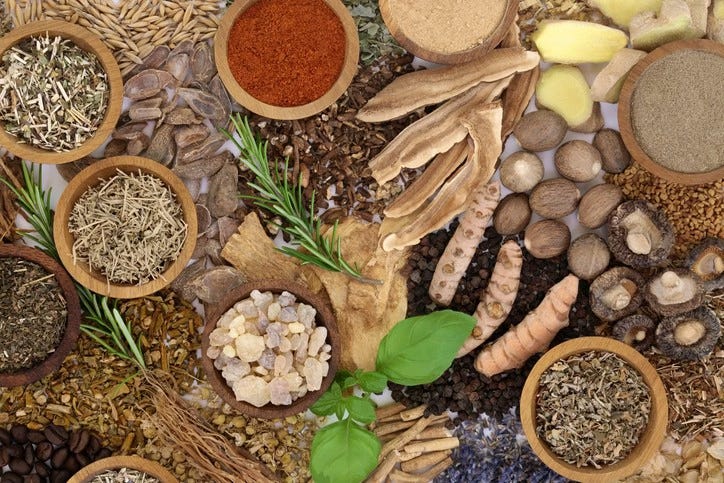
Adaptogens
What are Adaptogens?
Adaptogens are a class of medicinal plants that have been used in Ayurvedic and Chinese medicine for centuries. They work by increasing our ability to adapt and develop resilience in stressful conditions. Adaptogens target the hypothalamic-pituitary-adrenal (HPA) axis, a neuroendocrine system that uses cortisol to regulate various body functions such as digestion, mood, temperature control, and immunity.
Some of the more common adaptogens include: ashwagandha, schisandra, maca, and the adaptogenic mushrooms: reishi, chaga, and lion’s mane.
What Do Adaptogens Do?
Depending upon the adaptogen, it may have either a stimulating or relaxing effect on our nervous system. They have a wide range of purported effects from strengthening immunity, increasing mental focus, boosting energy, reducing stress, and helping with vasomotor symptoms (hot flashes, night sweats, etc.) that we experience in perimenopause.
Each adaptogen has a complex and unique mechanism of action that modulates the stress response. For instance, some adaptogens like rhodiola rosea have phytochemicals that act as selective estrogen reuptake modulators (SERMs), facilitating estrogen’s effects at a time when our ovaries may not be making very much of it. Other adaptogens impart anti-inflammatory effects by decreasing the expression of key genes that code for pro-inflammatory molecules in our brain cells.
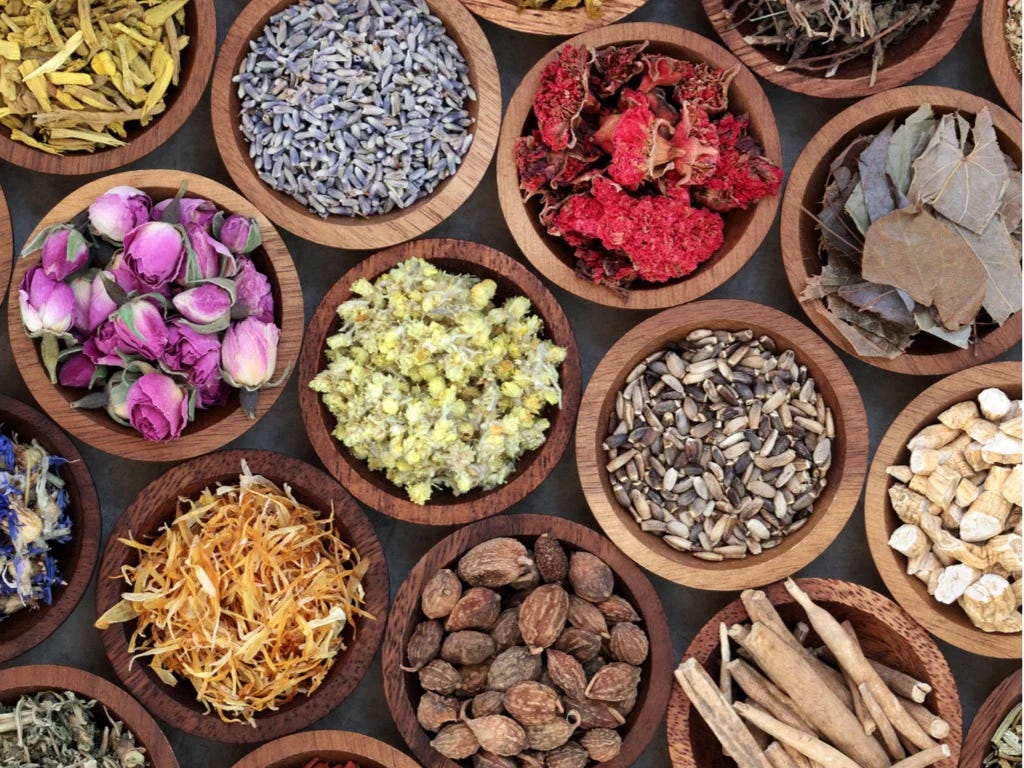
Is There Any Evidence that Adaptogens Work?
While adaptogens have been used for centuries in Eastern cultures, their effects have only begun to be studied clinically. Early research has shown promising results, but multicenter, randomized, double-blind studies still need to be performed.
Of the existing evidence for the use of adaptogens, here is a summary. I will list my resources below. You can also access female physiologist Dr. Stacy Sims’ adaptogen cheat sheet here: https://drive.google.com/file/d/1Pk8iOgoBeoKESAKclaV-RWres38qcIUS/view
(Panax) Ginseng: associated with ergogenic effects and enhanced muscle strength. May also help increase the body’s physical resilience and help with recovery between workouts.
Siberian Ginseng: stimulates the immune system, improves cognitive and memory functions, has a hypoglycemic effect, and is anti-inflammatory, increases effects of estrogen.
Rhodiola Rosea: useful for overcoming fatigue and activating the cerebral cortex by increasing norepinephrine and serotonin levels. In addition, it affects the HPA axis by reducing the levels of corticotropin, cortisol, and epinephrine.
Schisandra: powerful antioxidant properties, improves memory and concentration, enhances aerobic capacity.
Maca (Peruvian Ginseng): sex hormone support during peri-menopause, anti-inflammatory, improves mood and anxiety.
Ashwagandha: anti-stress and immunomodulatory, reduces cortisol. Is not a sedative, but can be used for its calming effect and therefore to induce better sleep.
Reishi: increases estrogen sensitivity (reduces vasomotor symptoms), increases concentration and focus, reduces sympathetic drive (calming, can be beneficial for sleep).
Lion’s Mane: powerful antioxidant and anti-inflammatory, known for its neuroprotective effects.
Chaga: immuno-modulatory by reducing inflammation, powerful antioxidant.
A Word on Safety
Adaptogens are supplements and, as mentioned in the previous post, supplements are largely unregulated. When checking labels, make sure the product has a certification from a third-party like U.S. Pharmacopeia, the NSF, or Consumer Labs to ensure it is a quality product.
Another problem with supplements is that they’re often blended together, so it’s impossible to tell how any one individual adaptogen is working. Many of these blended products don’t list the amounts. Dosage is important for any supplement, and it’s important to know how much of each we’re taking.
Because many adaptogens work on the HPA axis, they are contraindicated in people who have endocrine disorders (such as thyroid issues). They should also be used with caution in people with a history of endocrine-sensitive cancers (such as breast or prostate).
If you’re thinking of adding an adaptogen to your routine, make sure you’re taking a quality supplement, you know the dose you’re taking, and be sure to only introduce one new supplement at a time (so you can judge if it’s having the desired effect). Beware of contraindications and possible side effects. Always discuss with your physician before making an actionable change to your health.
My Take on Adaptogens
While I am interested in Lion’s Mane mushroom supplements (neuroprotective effects), I personally don’t feel I need to “adapt” my stress-response beyond what I already do (I use caffeine for focus, magnesium and L-theanine for sleep quality…) Also, I’m not yet experiencing vasomotor effects of peri-menopause so the thought of taking an adaptogen that might alter my body’s hormonal access isn’t appealing at this point. Overall, the potential downside outweighs any upside I might get from adding an adaptogen supplement at this time.
Colostrum
What is Colostrum?
Colostrum is a nutrient-dense dairy fluid that is released from the breast of mammals after giving birth for the purpose of providing nourishment to their young. Colostrum provides newborns with nutrients that protect and strengthen the mucosal barriers and their immune system. These nutrients include protein, essential fatty acids, antioxidants, and antibodies.
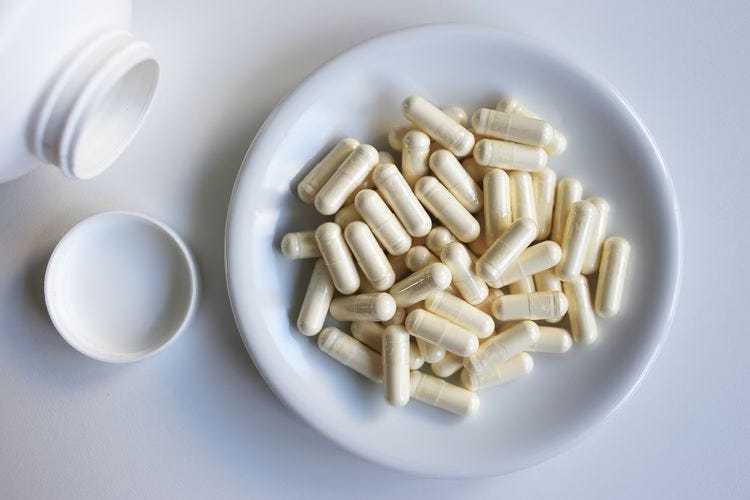
While we only have access to human colostrum the first 48-72 hours after birth, supplements sold in the marketplace utilize colostrum from dairy cows. Similar to human colostrum, bovine colostrum is a complex biological fluid replete with growth factors, nutrients, hormones, and paracrine factors. It is sold in a powdered form as well as in capsules.
What Does Colostrum Do?
Bovine colostrum supplements advertise a variety of health benefits that include contributing to mucosal healing in many infective and inflammatory conditions, supporting gut health, strengthening the immune system, aiding in muscle recovery, increasing lean muscle mass, improving skin quality, and thickening hair.

What is the Evidence that Bovine Colostrum Supplements Work?
Similar to adaptogen research, there are a multitude of research studies that attest to the benefits of bovine colostrum including its positive impact on gut health, hair and skin, metabolism, cognition, sleep, aging, and exercise performance. There is an especially growing amount of research on bovine colostrum’s efficacy in a range of clinical disorders of the stomach and intestine.
Unfortunately, not all colostrum preparations are equally effective when tested. And while early research has shown promising results, multicenter, randomized double-blind studies still need to be performed before a clear recommendation can be made on its usage.
Is Colostrum Safe?
Colostrum supplements are not regulated by the FDA. Standardized formulations and regulations for production do not exist. At the very least, make sure the product has a certification from a third-party like U.S. Pharmacopeia, the NSF, or Consumer Labs.
Additionally, if you are sensitive to dairy products, you will want to avoid colostrum supplements.
Always discuss with your physician before making an actionable change to your health.
My Take on Colostrum
While there isn’t RCT definitive evidence that supplemental bovine colostrum will help with gut health, lean muscle mass, or hair growth, there are a lot of lower-quality studies that support these claims. Since I don’t have any dairy restrictions and there doesn’t appear to be any downside to taking colostrum, I decided to start taking a certified capsule form daily. I’m especially monitoring any effect on bloating, skin health, or hair thickness… I’ll let you know how it goes!
References
Stacy Sims, PhD. Adaptogen Cheat Sheet: https://drive.google.com/file/d/1Pk8iOgoBeoKESAKclaV-RWres38qcIUS/view
NIH Dietary Supplement Fact Sheet: https://ods-od-nih-gov.ezproxy.med.nyu.edu/factsheets/list-all/#M
Nutritional and non-medication supplements permitted for performance enhancement: https://www-uptodate-com.ezproxy.med.nyu.edu/contents/nutritional-and-non-medication-supplements-permitted-for-performance-enhancement?search=colostrum&source=search_result&selectedTitle=1%7E37&usage_type=default&display_rank=1
Plant Adaptogens—History and Future Perspectives, Todorova, V, et al, https://pubmed.ncbi.nlm.nih.gov/34445021/
Anti-Neuroinflammatory Effects of Adaptogens: A Mini-Review, Wróbel-Biedrawa, D, et al: https://www.mdpi.com/1420-3049/29/4/866
Adaptogens on Depression-Related Outcomes: A Systematic Integrative Review and Rationale of Synergism with Physical Activity, Sánchez, I, et. Al, https://pubmed.ncbi.nlm.nih.gov/37047914/
ARMRA website: https://tryarmra.com/pages/research
Colostrum Therapy for Human Gastrointestinal Health and Disease, Chandwe, K, et al: https://pubmed.ncbi.nlm.nih.gov/34200282/
Therapeutic Applications of Human and Bovine Colostrum in the Treatment of Gastrointestinal Diseases and Distinctive Cancer Types: The Current Evidence, Bagwe-Parab, S, et al: https://pubmed.ncbi.nlm.nih.gov/33071773/
Colostrum and Lactoferrin Protect against Side Effects of Therapy with Antibiotics, Anti-inflammatory Drugs and Steroids, and Psychophysical Stress: A Comprehensive Review, Artym J, et al: https://pubmed.ncbi.nlm.nih.gov/37189633/
Bovine colostrum supplementation in prevention of upper respiratory tract infections – Systematic review, meta-analysis and meta-regression of randomized controlled trials, Halasa, M, et al: https://www.sciencedirect.com/science/article/pii/S1756464622003863
Chagaccino Photo : https://images.app.goo.gl/wkwTWKKydWHckztj9
Adaptogens Photo: https://images.app.goo.gl/PhCPYvB485hxnm4PA
Adaptogens Photo 2 : https://images.app.goo.gl/TFfofnc5Yg2nNenq5
Colostrum Pills Photo : https://images.app.goo.gl/wrxFzgTnrqSfRy7Q9
Dairy Cow Photo : https://images.app.goo.gl/mPGkvxhtegeDY85B6
Disclaimer
While I am a licensed medical doctor, this forum is not meant to be taken as medical advice. Please discuss any actionable changes to your lifestyle with your medical physician. The discussions here are for informational purposes only, no doctor-patient relationship is formed.